Monday, January 7, 2013

2012 Pagani Huayra


The eternity of the element air. Gentle and refined, yet the strength of the wind it is able to erode even the toughest of materials giving birth to distinctive shapes known in nature. Elegant and muscular the Pagani Huayra merges the past, present and future in a timeless interpretation of automotive art.

2012 Pagani Huayra
2012 Pagani Huayra


The styling of the car was perfected over the course of 5 years to find each line's beginning and end. During this study, eight scale models were created, as well as two 1:1 models, each an evolution of the previous in a never ending quest to perfect the form and refining the substance.

2012 Pagani Huayra
2012 Pagani Huayra

2012 Pagani Huayra
2012 Pagani Huayra

2012 Pagani Huayra
2012 Pagani Huayra

2012 Pagani Huayra
2012 Pagani Huayra

2012 Pagani Huayra
2012 Pagani Huayra

2012 Pagani Huayra
2012 Pagani Huayra

2012 Pagani Huayra
2012 Pagani Huayra

2012 Pagani Huayra
2012 Pagani Huayra

2012 Pagani Huayra
2012 Pagani Huayra

2012 Pagani Huayra
2012 Pagani Huayra

2012 Pagani Huayra
2012 Pagani Huayra

2012 Pagani Huayra
2012 Pagani Huayra


The bi-xenon headlamps are just one of the many precious gifts from the Zonda R, and LED daytime running lights are seamlessly integrated in the elliptical shape of the design. The rear bumper integrates with the diffuser and is dominated by an elliptical frame that surrounds the four central exhaust outlets, now becoming a characteristic Pagani element.

Backbone

The new central monocoque on the Pagani Huayra is an entirely new design made from carbontitanium. However, with the gull wing doors cutting deep into the roof, much research was focused on achieving the highest levels of rigidity through the application of new advanced composite materials and technologies first tested on the Zonda R. The fuel tank is located integrally in the best protected area of the monocoque, behind the driver, reinforced by safety cell made of different composite and ballistic materials. The front and rear CrMo subframes offer an exceptional rigidity-to-weight ratio to allowing the suspensions to work at their best while incorporating an advanced energy absorbing crash structure, ready to protect the occupants in the unlikely event of an impact.

The never ending quest for weight reduction resulted also into the combination of structural and non-structural or aesthetical elements. An example is the integration of all ventilation air ducts into the monocoque's structure, making the use of additional parts and ducts unnecessary.

The result of this attention to detail is a vehicle weighing 1.350 kg making the Pagani Huayra the lightest sportscar in its class.

Heart

Mercedes-AMG provides the heart for the Pagani Huayra. The 60 degree 12 cylinder turbocharged engine with a displacement of 5980 cm3 has been developed not just to meet the strictest technical and quality requirements, but also to give the car its many faces.

The calm and harmony of driving one of the world's most refined GT car is interrupted when the driver calls upon the Pagani Huayra to unleash its 700 horsepower and 1000 Nm of torque. The turbos have been studied to offer immediate response to the slightest throttle input, giving the driver full control over the engine at any rpm and preventing unwanted delays in the delivery of power.

The engine's systems have been designed and tested to stand up to the most adverse conditions of temperature and performance. The Pagani Huayra has been subjected to the highs of Death Valley and the lows of the Arctic Circle. The two lateral radiators are positioned in the front to guarantee the best cooling efficiency of the intercoolers placed over the cylinder heads. Dry sump lubrication ensures an optimal oil feed to the engine even when the car is subjected to the most extreme lateral accelerations. It also regulates the oil flow so that only the necessary amount of lubricant is actually pumped into the engine from the external oil tank, reducing the friction caused by an excessive volume of lubricant inside the engine sump. An oil/water heat exchanger reduces warm-up times by heating the engine lubricant during cold start and keeps engine coolant and lubricant levels at steady operational temperatures. Extensive weight saving programs led to ingenious yet simple solutions. In order to reduce hoses and connections as much as possible is built directly to the engine. The intercooler covers serve as expansion tanks to the low temperature circuit and the engine coolant circuit. The vertical fins contribute to the cooling of the tanks.

The M158 engine is homologated to meet the strictest environmental regulations, EU5 and LEV2. Despite the increase of power compared to the other Mercedes-AMG V12 engines developed for Pagani, CO2 emissions as well as the fuel consumption have been reduced, to make the Pagani Huayra class leading amongst 12 cylinder sports cars with values that are respective of much smaller vehicles in the market. The two stage fuel supply system features two microprocessor controlled pumps feeding fuel to the engine with the second pump only activated when necessary, thus reducing the energy required to run the fuel pumps and eliminates the waste of excessive fuel being transported and heated in the fuel lines. This efficiency combined with a large 85 liter fuel tank ensure Pagani Huayra's grand touring ability.

As an homage to the decennial tradition of Mercedes-AMG in building world class sports car engines, the M158 displays the historic AMG emblem on the intake manifold alongside the name of the technician that assembled the engine by hand at the Mercedes-AMG headquarters in Affalterbach, Germany.

The Titanium exhaust system has been engineered by MHG-Fahrzeugtechnik and is a direct application of race proven technologies on a high performance road car and the complete exhaust weighs less than 10 kg. Hydroformed junctions are used to reduce backpressure and guarantee a free flow of the exhaust gasses. Titanium guarantees a low weight in the muffler area while Inconel guarantees reliability on the parts of the exhaust more exposed to high temperatures. Careful attention has been paid to the tuning of its sound, which has led to a harmonic rumble at idle speeds with a hint of the power that lies hidden at low speed and a deep thunderous growl of motor and air, reminiscent of an airplane, at high speeds.

Feet

The power and prodigious torque generated by Pagani Huayra's V12 are transferred to the wheels through a transverse sequential seven speed gearbox and a dual plate clutch and the complete gearbox weighs only 96 kg. Keeping the weight of the rear overhang as low as possible has been a priority as we aim for a neutral behavior at the limit. A further benefit of this layout is a better behavior of the car during a rear impact. A dual clutch system was evaluated but ultimately not selected as it would have increased the weight by approximately 70kg, thus negating any minor improvement in shift-time.

Xtrac already supplied the gearbox for the Zonda R and so it was the natural choice for the development of a new high performance gearbox. Xtrac's expertise in motorsports was obvious throughout the design and material selection processes that resulted in the strongest and lightest gearbox possible suitable for road use, with a synchromesh box that offers comfort levels a race car gearbox will never be able to offer.

The suspension geometry has been designed to further enhance the sure-footed nature already present in the Zonda on the longer wheelbase Pagani Huayra. The individual suspension made with forged AvionAl double A-arms have been tested extensively on the Zonda R programme. Incorporated into the wheel hub assemblies are cooling ducts that connect directly to the support brackets, thus extending the reliability and lifespan of the bearings. Pushrod operated adjustable �hlins shock absorbers keep everything under control and have been optimized for the dynamic requirements of the vehicle.

"Power is nothing without control..."

Pirelli say "Power is nothing without control" and to assure complete control for the driver Pirelli has developed the bespoke P Zero tires, specifically for the Pagani Huayra. The Pirelli engineers were faced with a demanding task, combining road holding for excitement behind the steering wheel and lower rolling resistance to reduce CO2 emissions and fuel consumption. These P Zero tires are built in a dedicated MIRS� (Modular Integrated Robotized System) facility, dedicated to the production of ultrahigh performance tires and are at the forefront of what is technically possible, suited to top speeds above 370 kph as well as to lateral forces exceeding 1,5 G.

Skin

The aerodynamic concept of the Pagani Huayra is that of a wing. The vehicle can modify the properties of this wing by varying the front ride height, which can be adjusted dynamically, and by adjusting the 4 control flaps on each of the four corners of the car. The goal is to have a neutral vehicle behavior under all conditions and control body roll via aerodynamic means. The behavior of the flaps is managed by a dedicated control unit that is fed information from the ABS and ECU, which pass information about the car's speed, yaw rate, lateral acceleration, steering angle and throttle position.

The system improves aerodynamic efficiency in a variety of driving conditions, where a low drag coefficient is not the determining factor. During braking, for example, the rear flaps and the front suspension are raised to counteract the weight transfer and balance the weight distribution between front and rear axles, allowing a better use of the rear brake force.

Another vital design tenant for the Huayra project was to ensure clean airflow over the body of the car. The shape of the two engine air intakes behind the occupants shoulders are a tribute to the supersonic aircraft of the late 1950s and 1960s, but also allow the motor breath without disrupting the flow. The intake for the gearbox radiator is located between the engine bay window and the carbon clamshell of the rear bonnet, which provides an excellent airflow to the radiator without having a substantial impact on aerodynamic drag. This decision also led to the omission of a rear wing, replaced by the movable flaps.

The flow of air through the car was also carefully studied. The radiators are angled to contribute downforce and provide the best flow for hot air to be extracted. Air from the central radiator is extracted by vents on the front bonnet and trough the front wheelhouses. Air from the side radiators is channeled to ducts cooling the brake discs and wheel hubs. This air blows onto the brakes at a temperature of approximately 50�C warming the brakes up when cold and improving the first bite significantly. Lateral air outlets behind the front wheels generate a negative pressure inside the wheelhouse providing efficient extraction to lower the drag coefficient and generate downforce on the front.

In addition to the downforce generated by the flaps and body, two high negative pressure areas were designed into the shape of the underbody and the diffuser at the rear, thus enhancing the aerodynamic stability and guaranteeing the Pagani Huayra downforce under all circumstances.

Man-machine

As soon as the doors are closed the Pagani Huayra transports the occupants to a new dimension; a world that pleases and surprises the senses. Having everything at arm's length is not close enough for a vehicle with the capabilities of the Pagani Huayra. Consequently, the driver will find all primary functions directly on the steering wheel. The gearshift paddles are mounted directly to the steering wheel so the driver never needs to take his hands off the steering wheel. The seats provide both the comfort to make long trips enjoyable as well as the lateral support required when the g-forces build up on extreme driving.

A Pagani is able to present drivers with state of the art solutions while still drawing on the rich history that precedes it. The ever present emphasis is on a living breathing being rather than a digital one. This can be seen in everything from the leather latches to the toggle switches, but this ethos finds its purest expression in the mechanical aluminum gearlever assembly, a monument to the art of the manual gearshift; progress that does not deny the past. The aluminum dashboard takes inspiration from the most complex swiss watch designs and includes a central Multi-Function Display displaying performance relevant information when SPORT mode is engaged and a trip computer when the COMFORT mode is activated. The aluminum center console is machined from one solid block of aluminum and features a clarinet style array of mechanical switches controlling the HVAC system. The high definition central touchscreen is the heart of the vehicle infotainment system, controlling audio functions, satellite navigation, secondary vehicle functions and Bluetooth phone.

On the road

To this date five prototypes have been built which have been conducting road tests for the past 4 years. Currently, over half a million kilometers have been covered by our prototypes and before entering the US market we will have reached one million test kilometers.

Each prototype has been assigned to a specific development task. At Mercedes-AMG one is used to develop drivability, and another is used for emission development. One car is operated constantly by Bosch Engineering for the application of ABS and advanced stability and performance enhancement systems. Still another vehicle is used for gearbox testing, and general vehicle dynamics development.

Safety

The car complies to the strictest European and American standards in term of safety and pollution regulations. Several studies were conducted to determine the most frequent types of crashes involving high performance cars. The results of these studies have let us to develop specific safety measures not required by law but to guarantee an enhanced protection for the occupants. Several cars have been used to perform these tests.

Legend

Ancient legends of the Aymara tell us of Huayra Tata, god of wind, who commands the breezes, winds, and blizzards that invade the mountains, cliffs and hills of the Andean highlands. It is told that Huayra Tata resides deep in the high peaks and valleys, abandoning them only to demonstrate his power to his wife, Pachamama, goddess of mother earth. With his power Huayra Tata was able to lift the waters from lake Titicaca and rain them down on the fertile Pachamama. When Huayra Tata sleeps, the waters and rivers lay quiet. But the calm before the storm is about to be interrupted...

Pagani Huayra Technical Specifications
  • Engine: Mercedes-AMG M158 V12 twin-Turbo
  • Displacement: 5980 cc
  • Power: >700 CV
  • Torque: >1.000 Nm
  • Gearbox: transverse sequential seven speed gearbox; AMT robotyzed system with driving programs
  • Dimensions

  1. Length: 4605mm
  2. Height: 1169mm
  3. Body width: 2036mm
  4. Body width (with mirrors): 2356mm

  • Dry weight: 1.350 kg
  • Weight distribution

  1. Front: 44%
  2. Rear: 56%


Articles Source : NetcarShow

2011 Pagani Zonda Tricolore


Pagani Automobili created the Pagani Zonda Tricolore on the occasion of the celebration of the 50th Anniversary of the "Frecce Tricolori", as a tribute to the National Aerobatic Team.

In 2010 the aerobatic season of the Frecce Tricolori comes to its 50th anniversary, wich will be celebrated on 11th and 12th September at Rivolto Airport.

2011 Pagani Zonda Tricolore

2011 Pagani Zonda Tricolore

2011 Pagani Zonda Tricolore

2011 Pagani Zonda Tricolore

The Frecce Tricolori (Italian, literally Tricolour Arrows), officially known as the 313th Aerobatic Training Squadron is the demonstration team of the Italian Air Force, based at Rivolto Air Force Base, in the north-eastern Italian region of Friuli Venezia-Giulia, province of Udine. They were formed in 1961 as an Air Force team, replacing previous teams that had been sponsored by various commands by the end of the 1920s.

2011 Pagani Zonda Tricolore

2011 Pagani Zonda Tricolore

2011 Pagani Zonda Tricolore

2011 Pagani Zonda Tricolore


The team flies the Aermacchi MB-339-A/PAN, a two-seat aircraft capable of 898 km/h at sea level, with nine aircraft and a solo (the highest number of aircraft of any aerobatic team in the world).

The Frecce Tricolori belong to the legacy of the entire Italian community.

Pagani Zonda Tricolore Technical Specifications
  • Mercedes Benz AMG engine, Power: 670 hp, Torque: 780 Nm
  • Carbon-titanium monocoque
  • ECU, Traction control, ABS by Bosch Engineering
  • Inconel/titanium exhaust system coated with ceramic
  • Suspensions in magnesium and titanium
  • Cima sequential gearbox (6 speed), robotized by Automac enginnering
  • APP monolitic wheels forged in aluminium and magnesium

  1. front 9x19
  2. rear 12,5x20

  • Pirelli PZero tyres

front 255/35/19
rear 335/30/20
  • Brembo brakes in carbo-ceramic self ventilated with hydraulic servo brake

  1. front 380x34 mm, monolitic 6 piston caliper
  2. rear 380x34 mm, monolitic 4 piston caliper

  • Dry weight 1.210 kg
  • Weight distribution in driving condition: 47% front, 53% rear
  • Acceleration

  1. 0-100 km/h in 3.4 s
  2. 0-200 km/h in 9.6 s

  • Braking

  1. 100-0 km/h in 2.1 s
  2. 200-0 km/h 4.3 s

  • Maximum side acceleration: 1,45 G (with road tyres)
  • Downforce at 300 kph: 750 kg


Articles Source : NetcarShow

2010 Pagani Zonda Cinque Roadster


The Pagani roadcar model range would not be complete without Pagani Zonda Cinque Roadster, a Roadster version of the Pagani Zonda Cinque. As the name implies it is created in the Modenese Atelier in a limited production run of merely five exclusive pieces like its coup� sister.

2010 Pagani Zonda Cinque Roadster

2010 Pagani Zonda Cinque Roadster

2010 Pagani Zonda Cinque Roadster

2010 Pagani Zonda Cinque Roadster

2010 Pagani Zonda Cinque Roadster

2010 Pagani Zonda Cinque Roadster

2010 Pagani Zonda Cinque Roadster


All weight reduction measures adopted by Pagani to improve driving pleasure, performance and emission of the Zonda Cinque have found use in the Pagani Zonda Cinque Roadster as well. The Carbon-Titanium chassis has been redesigned for the compensation of a missing roof.

The Cinque experience is enhanced with the roof stored in the front bonnet, when the storm of air being fed to the 678hp Mercedes AMG V12 engine through the massive intake just inches over the passengers' ears, accompanies the exhaust note of the bespoke Pagani Zonda Cinque Inconel and Titanium exhaust system.

Whether you opt for a relaxed country drive in Tuscany's hills, visiting Florence and other centres of the Italian Renaissance, or a record hunt at the N�rburgring, this 1.3 milion Euro + taxes jewel will reward with every day driveability and ultimate performance thanks to the different drive modes of the sequential robostised gearbox and an adjustable suspension setup that feels at home as well at the racetrack as on bumpy roads.

The constant efforts of Horacio Pagani and his team shows once again how art and engineering can be combined in the Pagani Zonda Cinque Roadster.

Technical Specifications
  • Mercedes Benz AMG engine
  • Power: 678 hp
  • Torque: 780 Nm
  • Carbon-titanium monocoque
  • ECU, Traction control, ABS by Bosch Engineering
  • Inconel/titanium exhaust system coated with ceramic
  • Suspensions in magnesium and titanium
  • Cima sequential gearbox (6 speed), robotized by Automac enginnering
  • APP monolitic wheels forged in aluminium and magnesium, front 9x19, rear 12,5x20
  • Pirelli PZero tyres, front 255/35/19, rear 335/30/20
  • Pagani leather/carbon fibre racing seats
  • Brembo brakes in carbo-ceramic self ventilated with hydraulic servo brake, Size: front 380x34 mm, monolitic 6 piston caliper; rear 380x34 mm, monolitic 4 piston caliper
  • Dry weight 1.210 kg
  • Weight distribution in driving condition: 47% front, 53% rear
  • Acceleration
  • 0-100 km/h: 3.4 s
  • 0-200 km/h: 9.6 s
  • Braking
  • 100-0 km/h: 2.1 s
  • 200-0 km/h: 4.3 s
  • Maximum side acceleration: 1,45 G (with road tyres)
  • Downforce at 300 kp/h: 750 kg


Articles Source : NetcarShow

Sunday, January 6, 2013

2013 Renault Espace


Twenty-eight years after the launch of the original, New Renault Espace continues the model's success story which has seen sales exceed 1.2 million units.

New Renault Espace features Renault's new styling identity which reasserts the model's personality by ensuring an even more dynamic stance. As is the case with all the brand's new vehicles, the Renault logo is more prominent, more upright and stands out even more clearly against a broad black grille bar which is itself picked out by chrome strips.

2013 Renault Espace
2013 Renault Espace

2013 Renault Espace
2013 Renault Espace

2013 Renault Espace
2013 Renault Espace

2013 Renault Espace
2013 Renault Espace

Other details which accentuate New Espace's more dynamic, status-enhancing looks include new 'Hurlingham' wheel trims and new 'Monterey' and 'Dark Eptius' alloy wheels.

Meanwhile, the elegantly-appointed cabin of the Initiale Paris version has been embellished with visible stitching for the model's hallmark dashboard. The sensation of comfort and wellbeing for all occupants is further emphasised by the leather and Alcantara� upholsteries.

Even greater respect for the environment: CO2 emissions reduced by 20g/km (equivalent to a fuel consumption saving of 0.8 litres/100km) for the diesel version, and by 6g/km (0.3 litres/100km) in the case of the petrol version.

Coupled to a six-speed manual gearbox, the 130hp, 150hp and 175hp versions of the 2.0 dCi engine (M9R) emit just 150g of CO2/km (a saving of 20g/km), equivalent to fuel consumption of 5.7 litres/100km (down 0.8 litres/100km). The state 'eco-surtax' applicable in France has come down accordingly by �550.

Mated to automatic transmission, the same engines emit 169g of CO2/km (a saving of 20g/km), equivalent to fuel consumption of 6.4 litres/100km (down 0.8 litres/100km). Here again, the 'eco-surtax' applied by the French state has been reduced by �550.

The 175hp version with manual gearbox delivers the segment's lowest CO2 emissions for its power output.

With the 2.0 dCi engine under the bonnet, fuel consumption and CO2 emissions have come down by 1.7 litres/100km and 27g/km respectively over a period of six years since this powerplant became available for Espace in 2006.

In the case of the 2.0-litre turbocharged petrol engine (F4Rt), CO2 emissions have fallen to 198g/km (a saving of 6g/km), equivalent to fuel consumption of 8.5 litres/100km (down 0.3 litres/100km).

These results were achieved by the engineers' work on:
11111.Evolutions to the diesel engines: introduction of ESM technology (braking and deceleration energy recovery), a variable displacement oil pump, advanced cooling management and cold loop EGR (exhaust gas recirculation).
Chassis and running gear improvements: a three-percent improvement in CdA thanks to revised underbody shielding, plus new low rolling resistance tyres and electro-hydraulic power steering.

The MPV's pioneer continues to be perfected

All the strengths that have helped forge Renault Espace's success have been carried over to the latest version, including vast cabin space and a modular layout, as well as a level of comfort and visibility that all occupants will appreciate.

New Renault Espace continues to propose the large seven-seat MPV segment's most occupant-friendly cabin, including seven real seats and a brightly lit interior thanks to a large opening sunroof.

New Renault Espace's upholstery features an innovative textile which repels water- and oil-based liquids. Renault is the first carmaker to propose Teflon� Automotive High Protection textile which protects individual fibres without affecting their appearance, comfort or feel. This innovation is particularly ideal for family vehicles since it prevents stains from becoming incrusted and facilitates the cleaning of upholsteries to ensure they maintain their 'new' feel durably.

To facilitate manoeuvring and parking, New Renault Espace is available with a reversing camera. The driver benefits from precise indications thanks to a graphic overlay of the vehicle's volumes on the colour image displayed on the screen of the navigation system's screen which is positioned centrally and high up on the dashboard.

Also available for Espace, irrespective of equipment level, is a DVD player complete with two seven-inch screens built into the back of the front head rests. This multimedia feature will delight children and is a factory-fitment in order to ensure an irreproachable quality finish and less risk of theft.

New Renault Espace's equipment list continues with a range of technologies designed to take the stress out of motoring and make life easier for occupants. Standard features for all versions include connected Carminat TomTom Live� navigation system, a hands-free card, an electronic parking brake and comprehensive connectivity (Bluetooth� audio streaming, AUX and USB sockets).

Last but not least, New Renault Espace's cabin layout is as modular as ever thanks to seat rails which enable the seats to be positioned exactly according to the needs of the moment. New Renault Espace's interior can be rearranged at will to guarantee the highest level of comfort for up to seven occupants.

New Renault Espace, which is manufactured at Renault's Sandouville factory (France), comes with the guarantee of Renault's design, build and dynamic quality, as well as carefully selected materials to maintain the model's status as a modern incarnation of French-made, high-end luxury.

ALAIN PROST TALKS ABOUT RENAULT ESPACE

"Every time I climb aboard, I have the feeling that I'm in a vehicle that offers something a little bit different. No other people carrier, SUV or 4x4 offers the same atmosphere and handling; it's a unique experience. You might think that Espace was quite a 'massive' car but, in fact, it's no bigger than a family saloon and it's very easy to drive straight away. The very good handling, quality of the suspension and high level of comfort are really astonishing. For me, Renault Espace is a car that can be driven in a relaxed, family way - or even more sportily, if you want to."

RENAULT ESPACE: THE SUCCESS STORY OF A PIONEER

In the course of a career which has so far spanned 28 years, Renault Espace has won over an extremely high number of loyal customers, with sales of the model exceeding 1.2 million units in Europe.

At the time of its launch in 1984, Renault Espace established the revolutionary MPV concept which was the fruit of cooperation between Renault and Matra.

1984 - Espace 1: Espace was revealed to the media in April before going on sale the following July. Its modular layout took the automotive world by surprise, since it was possible to remove the five rear seats altogether or even create a cosy 'lounge' feel by swivelling the front seats to face rearwards. The model epitomised Renault's 'Les Voitures � Vivre' ('cars for living') slogan.

1991 - Espace II: the second-generation Espace was even more dynamic and its lines were softer. The extremely slim windscreen pillars were concealed by the side windows, while the mirrors were a fluid extension of the bodywork. The car was even more user-friendly thanks to the introduction of rails to fix the rear seats. The combination of a V6 powerplant and automatic transmission underpinned Espace high-end status.

1996 - Espace III: the third generation of the model saw an increase in Espace's overall dimensions. An extended version, Grand Espace (27cm longer), was introduced in January 1998. Espace III marked the end of the collaboration between Renault and Matra with regard to this model.

2002 - Espace IV: the latest-generation version is made entirely by Renault at the firm's Sandouville plant, in northern France. It is built on the same platform as Laguna 2 and Vel Satis. Its assertive personality is expressed by tauter, more modern lines which confirm its high-end status in the large MPV segment. The most prominent innovation was the fact that its bodywork is now made from steel and no longer from composite materials. Another innovation was the moving of the climate control unit from the engine bay to beneath the cabin floor.

2012 - The story continues� Invented 28 years ago, Espace continues to be stand out as a model ahead of its time thanks to a succession of detail changes which have merely served to confirm its original DNA.

Articles Source : Netcarshow

2013 Opel Mokka


The all-new Opel Mokka has captured the hearts of its customers. During the first 4 months that it has been available more than 40,000 orders were received for the SUV throughout Europe. Demand has been particularly strong in Germany, the United Kingdom, Italy, France and Russia. With the Mokka Opel is the first German manufacturer to enter the rapidly growing segment of sub-compact Sports Utility Vehicles (SUV-B segment). The 1.6 liter ecoFLEX entry level Opel Mokka variant with 85 kw/115 hp can be ordered from 18,990 euro (Germany, including VAT). In addition, a turbocharged gasoline unit offering 103 kW/140 hp of output and a diesel 1.7 liter engine variant with 96 kW/130 hp are included in the Mokka's powertrain line-up.

2013 Opel Mokka
2013 Opel Mokka

2013 Opel Mokka
2013 Opel Mokka

2013 Opel Mokka
2013 Opel Mokka

2013 Opel Mokka
2013 Opel Mokka

2013 Opel Mokka
2013 Opel Mokka

2013 Opel Mokka
2013 Opel Mokka

2013 Opel Mokka
2013 Opel Mokka

"Now that we have the Mokka, a new chapter in our product offensive has begun. Our successful order intake shows that the Mokka is spot on. Its technologies, dynamic and bold design appeals to the taste of our customers. It sets new standards in its segment," says Opel Vice President, Sales, Marketing and Aftersales, Alfred E. Rieck.

Despite its 4.28 meter measurement, the Opel Mokka generously accommodates five people in a commanding position. It also delivers on Opel's promise to combine attractive design with innovative technologies and upmarket functionalities, making them accessible to a wider segment of customers. Furthermore, the Opel Mokka introduces ergonomic seating for the first time to the sub-compact SUV market as well as adaptive forward lighting (AFL+) and the integrated FlexFix bike carrier. Drive and comfort enhancing features and technologies include the Electronic Stability Control (ESC), and across all Mokka versions the Traction Control (TC) as well as the Hill Start Assist (HSA) and Hill Descent Control (HDC) systems. Apart from front-wheel drive (FWD), the Mokka can be fitted with an intelligent all-wheel drive (AWD). The optional AWD technology recognizes automatically when traction is needed on all four wheels and ensures that it is provided at a maximum level when necessary.

In the interior, the new Mokka also reflects Opel's typical sculptural design DNA which is captured through the signature wing-shaped instrument panel that wraps around the door inserts and the artfully sculpted surfaces in the doors.

Although the Mokka is small on the outside, the interior comes across as belonging to a much larger upmarket vehicle. Such components and finish, subtle fine chrome accents that are sensitively surfaced all add to the high quality feel. For example, center chrome rings and chrome dividers give a technical, modern impression.

Typical Opel values such as versatility and user-friendly functionality are also visible: from the dual glove box configuration of the instrument panel, the closed storage in the tunnel console to the deep lower pockets in both the front and rear doors. Many of the 19 storage spaces have been designed with active families in mind, such as the cleverly concealed armrest in the rear bench that also contains a cup holder or the storage areas in front and behind the gear shifter. With up to 1,372 liter of loading space and a cleverly designed hat shelf in the trunk which can be easily adjusted by hand, the Mokka offers many useful storage solutions. In addition, the rear bench can be split and folded in a 60:40 ratio providng even more flexible loading and transportation.

The Mokka is very much a driver's car with excellent ergonomics and comfort. This is reflected in a high seating position, a great all-round view out the vehicle as well as optional AGR certified seats ("Aktion Gesunder R�cken e.V."). Another driver-friendly feature are the simple and precise chronograph-like graphics in the instrument panel.

A touch of style and elegance is brought to the Opel Mokka in its upper "Cosmo" trim levels where embossed seat fabrics and high quality two-tone colored stitching can be found throughout the cabin, underscoring its refinement. Leather like "Moroccana" seat bolsters are provided either in Jet Black/Dark Galvanized combinations or in the new brown Cocoa/ Saddle Up fabric. The instrument panel and doors d�cor is covered in a striking tungsten brush (Jet Black seats) or sephia bronze film (Cocoa seats). For an even more luxurious atmosphere, customers can opt for black or the brown Cocoa/Saddle Up leather seats.

In the entry to mid trim levels "Essentia" and "Enjoy", customers benefit from high quality woven Jet Black cloth or Cocoa / Dark Adriatic seat fabrics (depending on trim), soft seat inserts, liquid platinum instrument panel and door d�cor moldings and chrome door release handles. All of these features give the Mokka a functional and comfortable environment.

Efficient engines, clever all-wheel drive technology and dynamic handling

An intelligent chassis system in combination with front wheel or adaptive all-wheel drive technology and electronic safety features mainly to be found in upper vehicle segments ensure that the handling of the all-new Opel Mokka remains dynamic and the ride comfort is high. The SUV sets new standards in its segment with its combination of modern gasoline and diesel engines as well as automatic and manual transmissions. With the Mokka, Opel is expanding its product portfolio and is the first German car maker to enter the growing sub-compact SUV segment.

Customers with active lifestyles

Customers who opt for the Mokka are making a conscious decision in favor of a sub-compact SUV model rather than a larger SUV. This means that they are choosing a car that is just the right size for urban environments, while also balancing the need to engage in everyday activities with weekend pursuits. Research has shown that the typical Opel Mokka customer is middle aged and leads a very active lifestyle where leisure activities play a central role in his or her life. That is why the Mokka with its many optional extras like the FlexFix bicycle carrier is perfect for people who want to balance their busy daily lives with leisure activities.

Potential customers are also known to be technology-orientated people who appreciate Opel's cutting edge onboard technologies with the offer of many Opel exclusive assistance systems, safety and comfort features high up on their agenda. The Mokka provides many technologies that are unique in the segment such as optional ergonomic AGR certified premium seats, several Opel Eye front camera functions and Adaptive Forward Lighting (AFL+). For example, almost half of all customers opting for the Mokka's Enjoy trim level are expected to choose the electronic climate control. According to orders received so far, there is a high expected demand for option packs which combine several safety and comfort feature into one package, offering attractive savings to customers.

Typically the majority of SUV-B customers (75%) are private buyers, while the rest are likely to be fleet and business customers. The Opel Mokka will attract customers who are new to the brand.

Established SUV tradition at Opel

Opel is not new to the SUV market and has established a successful track record in this segment over the past two decades. In 1991, Opel launched the all-wheel drive Frontera off-roader. It was the first European combined off-roader and SUV type of car. A year later, the Opel Monterey followed which was a mid-size pure off-road vehicle. After a brief absence from the SUV market, Opel returned in 2006 with the Antara. The sporty crossover was updated in 2011 with a comprehensively refreshed appearance and powertrain line-up. With the sales debut of the Opel Mokka in the fall of 2012, Opel customers are now able to choose from two attractive offers in the SUV segment.

Articles Source: Netcarshow

2013 Opel Cascada


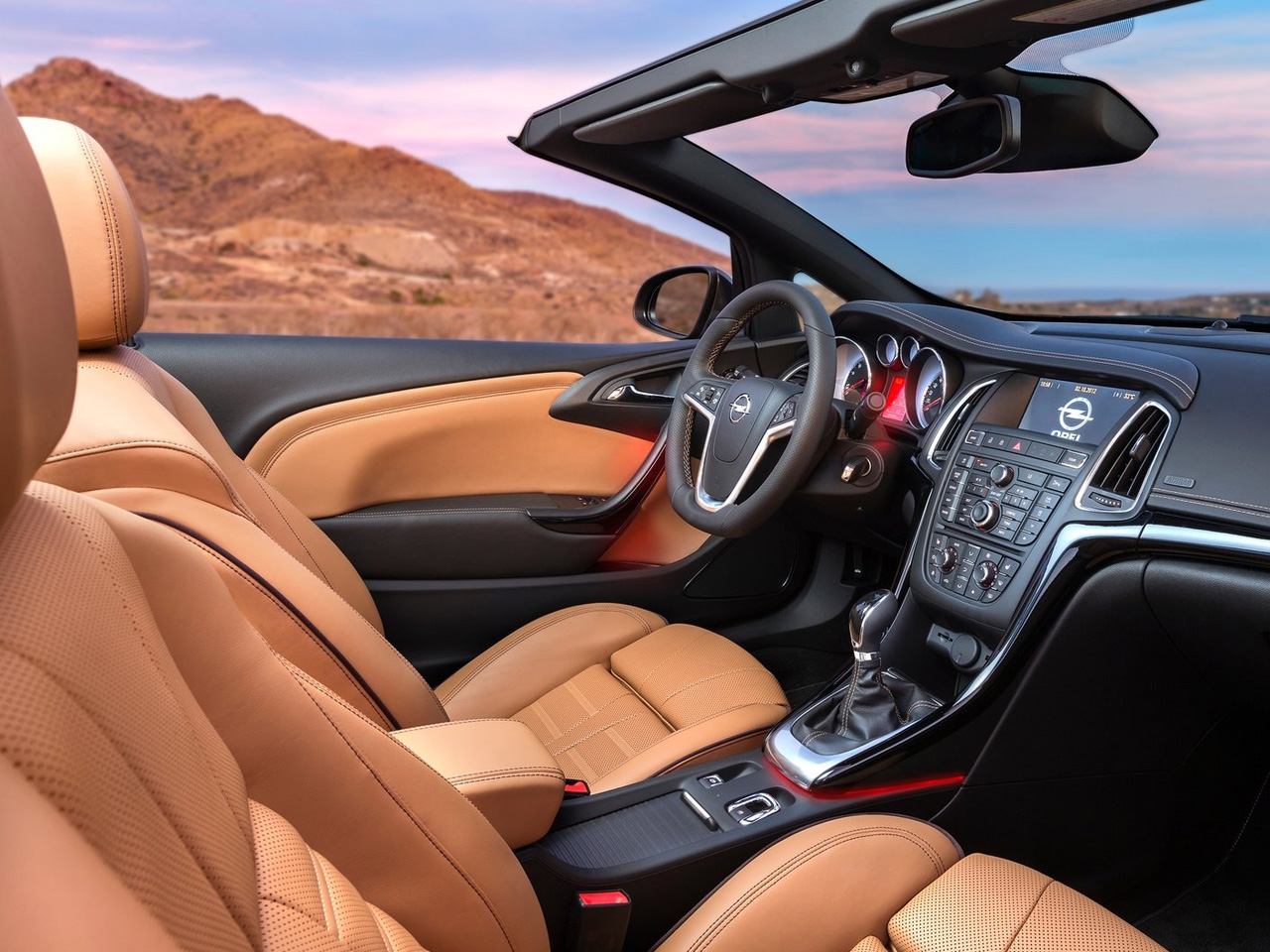
Back to the most intense automotive experiences: cruising along with the sun softly warming your skin; feeling the air thickening in your open hand as speed increases; tipping back your head and finding no limit to your view, just diving into the deep blue sky. These are typical Cascada moments. The Cascada, Opel's new all-season convertible due to be launched in early 2013, is a classy four-seater with an elongated silhouette and a high-quality soft top. Heading to the top of Opel's line-up, the Opel Cascada is a midsize convertible not only by its size (length: 4,697 mm; width 1,840 mm excl. mirrors) but also by its allure and the premium technologies and features it offers.

2013 Opel Cascada
2013 Opel Cascada

2013 Opel Cascada
2013 Opel Cascada

2013 Opel Cascada
2013 Opel Cascada

2013 Opel Cascada
2013 Opel Cascada

2013 Opel Cascada
2013 Opel Cascada

2013 Opel Cascada
2013 Opel Cascada


After several generations of compact Kadett and Astra cabriolets, Opel returns to an older tradition of prestigious and rare midsize, four-seat soft-top convertibles from the fifties and sixties - like the Kapit�n and the Rekord - but in a new, refreshing way and with the best of modern technologies. The Opel Cascada provides a sharp driving experience thanks to its super-rigid body, HiPerStrut front suspension and FlexRide adaptive damping system. Its driver and passengers can enjoy the open-air feeling thanks to the premium soft top that can be opened at the touch of a button in 17 seconds while driving at speeds of up to 50 km/h. Electric seat belt presenters, exclusive Nappa leather and ventilated, ergonomic seats as well as invisible, watchful safety systems make life serene and safe.

Thomas Sedran, Deputy Chairman of Adam Opel Management Board: "The midsize cabriolet segment is only occupied by very high-priced cars from premium manufacturers. With the Cascada, Opel offers all the typical features and premium qualities of a midsize convertible, but at an affordable price. The Cascada rounds off Opel's product offensive: in 2012 and 2013, we're enhancing our portfolio and entering all-new segments, with the electric Ampera, the small SUV Mokka, the fashionable, urban ADAM, and now this midsize convertible."

Attitude: Pure soft-top elegance enables full open-air enjoyment

With its broad stance and a flowing continuity of sculptured shapes that is typical for Opel, the Cascada design reflects the classic and timeless elegance of the "Grandes Routi�res" of a bygone and glamorous age. With the top down for open-air drives, the Opel Cascada has a perfectly clean profile: behind the fast and gracefully raked A-pillar, no roof top cover or visible rollover protection disturbs the silhouette. Below this clarity and to add some drama, the subtle Opel blade on the lower body side is mirrored in its upper part by a sharp crease that swings upward to the rear end, into the wraparound rear lights. The gently upswept waistline is highlighted by a horizontal chrome strip that elegantly sweeps around the cockpit, fluidly and elegantly marking the boundary between the roof top and the body.

"Most convertibles look good with the top down, but many seem clumsy with their roof up. Thanks to its high-quality, aerodynamically clean soft top with a perfect, seamless profile, the Opel Cascada also cuts a fine figure when closed," says Malcolm Ward, Director Exterior Design.

Tastefully sculpted in a purposeful power bulge, the bonnet tops a deepened front grille with bold chrome applications. The fog lights are carried in two overturned shark fin elements, which are visually enhanced and balanced by chrome inserts. Both using LED technology, the daytime running lights in the headlamps and the rear lights incorporate the Opel-typical wing signature. In the rear, the LED lighting modules are diffused for giving a solid and sharp light signal - a typical feature of premium class cars. A proud chrome strip linking the lighting units set into the boot lid balances the front chrome trim.

Top quality materials selected from suppliers of the most prestigious premium cabriolets are used to build Opel Cascada's soft top. It benefits from superior acoustic and thermal insulation thanks to a special layer of polyester fleece between the outside layer and the interior lining. An electro-hydraulic mechanism activated via a switch located between the front seats opens the roof in 17 seconds at driving speeds of up to 50 km/h - placing the Opel Cascada among the benchmarks in roof-top operation. In addition, key-operated remote control for opening and closing the top is standard in all Cascada models. Three soft top colors are available at launch. They can be coordinated with ten different body colors.

Indulgence: Crafted cockpit with outstanding comfort and functionality

The Opel Cascada's cockpit offers a striking, sculptural yet sporty design highlighted by precise, handcrafted details. The lines of the wing-shaped instrument panel, which features real stitching on soft, wrapped surfaces, flow into the doors, dynamically embracing the front-seat occupants. All new richly trimmed seats are offered in several elegantly embossed fabrics and leathers. The up-level AGR certified ergonomic seats are wrapped in rich, soft Nappa leather and benefit from heating and ventilation systems: on hot, sunny days, fresh air is drawn through the holes in the perforated leather to increase front occupants' comfort. Securing them is easy and comfortable due to the electric seat belt extender which brings the seat belt within close reach using a telescoping arm. An electric Easy Entry system makes access to the rear seat swift and comfortable.

The Opel Cascada benefits from great storage and stowage capacity for a convertible, allowing comfortable, all-season daily use. Several useful, large storage spaces have been placed around the driver: in the door, in and under the instrument panel and, thanks to a standard Electric Park Brake, in the center console - just where you need storage space the most. The minimum load volume with the roof open is 280 liters, and up to 350 liters are available when the soft top is closed. To extend its load volume or transport exceptionally long objects, the Opel Cascada benefits from the FlexFold system that electrically releases and folds down the 50:50 split rear seat back rests - a feature that cannot be offered in hard-top cabriolets.

Excellence: Superior body stiffness combines with outstanding chassis technology

Body stiffness is a key criterion for open-roof vehicles; it has a high impact on their driving behavior, steering precision, acoustics, safety and comfort and also conveys a clear feeling of their genuine quality. The Opel Cascada provides an superior balance between torsional and bending stiffness thanks to several measures including impressive underbody crossed steel bars and reinforced rocker profiles. Compared to Opel's previous generation cabriolet, the Astra TwinTop, the Cascada's body is 43% stiffer in torsion and 10% in bending. This layout provides a solid basis for the suspension and contributes towards significant reduction in noise, vibrations and harshness.

The new midsize Opel Cascada naturally has a more impressive footprint than the 2006 compact Astra Twin Top. The wheelbase is 71 mm longer, the front tread 56 mm and the rear tread 70 mm wider. That benefits handling and stability. The front axle of the Cascada features as standard the best of Opel chassis technology with the HiPerStrut layout that was initially developed for the Insignia OPC. HiPerStrut (High Performance Strut) separates the functions of damping and steering and provides highest traction and cornering precision as well as reduced torque steer and improved grip under all circumstances. The Opel Cascada has electrically powered rack-and-pinion steering with speed sensitive assistance. For more direct steering feel and precision, the electric motor is mounted on the rack, as opposed to the base of the steering column. FlexRide, Opel's integrated, fully adaptive chassis control system is of course available in the Cascada. It enhances its ride and handling performance and safety as it adapts to the driving situation, driving style as well as the drivers' preferences. The Opel Cascada can be equipped with 17" to 20" wheels. Brake discs have sizes of up to 326 mm in front and 325 mm in rear.

Performance: New generation direct Injection 1.6 Turbo gasoline engine

A broad powertrain line-up will be available in the Opel Cascada convertible. The 1.4 gasoline Turbo opens the portfolio; it is combined with a manual 6-speed transmission and is available in two output versions of 88 kW/120 hp and 103 kW/140 hp, both delivering up to 220 Nm thanks to an overboost function. On the diesel side, the 2.0 CDTI with 121 kW/165 hp comes with either a manual or an automatic 6-speed transmission. This engine delivers up to 380 Nm when its overboost is active.

The highlight in the Opel Cascada powertrain line-up will be the 1.6 SIDI Turbo ECOTEC gasoline engine. This midsize direct injection unit is part of a fully new generation that makes its debut in early 2013 and is geared to very smooth ride and torque delivery and great fuel economy. It delivers 125 kW/170 hp, between 1,650 and 3,200 rpm - and 280 Nm thanks to an overboost function. This engine will be available with manual and automatic 6-speed transmissions. The new, low-friction 6-speed automatic transmission in the Cascada features an Active Select function that allows manual shifting for a more sporty driving experience.

More powerful versions of both gasoline and diesel engines will be launched in the Opel Cascada at a later stage.

Serenity: Sophisticated technology and safety features

The Opel Cascada combines an open-air driving experience with the best of Opel technology. This includes the AFL+ Adaptive Forward Lighting system with up to 11 automatic functions, the second generation Opel Eye front camera with its new, extended functionalities (enhanced Traffic Sign Recognition and Lane Departure Warning, new Following Distance Indication and Forward Collision Alert), a rear-view camera and an Advanced Park Assist that eases parking maneuvers, an ultra-sonic based Side Blind Spot Alert, ergonomic front seats, a heated steering wheel, and Hill Start Assist.

The Opel Cascada's extremely rigid passenger cell is mainly fabricated from high-strength steel for the least deformation and largest possible survival space in crash conditions. Doors have diagonally mounted ultra-high strength steel beams and beltline reinforcements. The A-pillars supporting the windscreen are in press hardened steel. In case of roll-over, pyrotechnically activated spring-loaded high-strength bars automatically deploy behind the rear seats. These pop-ups are also triggered during other severe impacts - when airbags are deployed - in order to prepare the vehicle for possible secondary impacts and resulting roll-over. Front seats both benefit from two-way active headrests and double seat belt pre-tensioners and even the two rear seats have seat belt pre-tensioners.

Articles Source: Netcarshow

2013 Opel Astra Sedan


Opel is expanding its successful Astra model family with a new sporty and stylish sedan. Featuring typical Astra strengths, including advanced technologies and its widely recognized quality, the new upscale and elegant notchback is a more affordable alternative for customers who would usually opt for this type of car in the mid-size segment. With this new four-door Opel Astra Sedan, the five-door hatchback, the Sports Tourer station wagon and the racy GTC coupe, the line-up of Opel�s top-seller Astra is now complete.

2013 Opel Astra Sedan

2013 Opel Astra Sedan

2013 Opel Astra Sedan

2013 Opel Astra Sedan

2013 Opel Astra Sedan


At the start of sales in June 2012, customers can initially choose between seven engines for the new Opel Astra sedan: four gasoline units (74 kW/100 hp to 132 kW/180 hp), of which three can be combined with a six-speed automatic and three diesel engines (70 kW/95 hp to 96 kW/130 hp). The two ultra-efficient Astra notchback 1.7 CDTI ecoFLEX models with Start/Stop system and further efficiency enhancing technologies combine powerful outputs of 81 kW/110 hp or 96 kW/130 hp with diesel consumption figures as low as 3.7 liters per 100 kilometers. This is equivalent to only 99g/km CO2 emissions. In addition to this broad powertrain offer, early next year the new Astra four-door will benefit from the launch of Opel's new highly efficient, powerful and refined SIDI ECOTEC four-cylinder gasoline engine generation with 1.6 liters displacement, turbocharging and spark ignition direct injection.

The new Astra notchback sedan (Length/Width/Height: 4,658/1,814/1,476 mm) has a wheel base of 2,685 mm and provides generous interior space. Its separate trunk offers 460 liters of volume - 90 liters more than the five-door model. By folding the 60:40 split rear bench flat the luggage volume can be increased up to a maximum of 1,010 liters.

"With its sporty and elegant design, the new Astra sedan re-energizes the compact four-door segment. Like all our Astras it is engineered in R�sselsheim and offers a high level of technology and widely recognized quality," says Opel CEO, Karl-Friedrich Stracke. "Our new Astra notchback is an important part of our product offensive and plays a key role in our growth strategy. It is a stylish, more affordable alternative to many four-door sedans in the mid-size segment, therefore we see significant conquest potential in Western Europe. It will also play a leading role in substantially increasing our market share in key growth markets such as Russia and Turkey, where there is strong customer demand for compact cars with a separate luggage compartment."

Sporty and stylish design combined with balanced proportions

The Opel design team gave the new Astra notchback a very stylish and sleek silhouette. The roofline arcs gently over the passenger area, then descends in a seamless sweep through the steeply raked rear screen to the sculpted aerodynamic lip at the end of the short rear deck. And because the raked C-pillar stretches so far back into the rear deck area, it visually conceals the size of the trunk in an elegant fashion. The feature line running through the door handles becomes more defined towards the rear, creating a muscular "shoulder" effect below the base of the C-pillar and the rear deck.

The rear is characterized by the steeply raked rear screen, the integrated deck spoiler, and the broad sweep of the sculpted bumper. The design of the tail lights echoes those of other Astra models, and the subtle crease which links them adds width and avoids any impression of bulkiness. The lamps also have an inner wing shape for the taillight function that continues the Opel brand signature. There are more sculptural features within the bumper where the number plate indent reflects the shape of the deck-lid cutout. Together, all these elements combine to create a particularly well-balanced and harmonious automotive design.

The Vice President of Design, Mark Adams, says: "The Astra model family implements our design language with sculptural artistry meeting German precision in a very dynamic fashion. All body style variants have their very own personality. We believe that the Astra four-door sedan we're now launching is the best proportioned and most stylish notchback currently available in the compact segment." Customers who wish to make their Opel Astra Sedan even more attractive visually, can choose from a wide offer of wheel designs of sizes up to 19 inches.

Top technology standards and typical Astra qualities in notchback segment

With its sporty, elegant design, typical Astra qualities and a large array of technological highlights - some are unique, some are unusual for the segment - Opel�s new compact four-door notchback targets customers with high expectations. The Advanced Forward Lighting (AFL+) with bi-xenon headlamps and a host of sophisticated lighting functions including variable light distribution, curve light, cornering light and high-beam assist greatly enhance active safety. The adaptive FlexRide chassis system automatically adjusts damping to the prevailing driving conditions and gives the driver the choice between three different modes - Standard, the comfort-oriented Tour mode and the more responsive Sport mode. The highly ergonomic AGR ("Aktion Gesunder R�cken e.V") approved seats that are easy on the back are available for the driver and the front passenger. Added to that are several infotainment systems which make travelling even more relaxing and safer. The Navi 900 top unit features the routes of more than 30 European countries and a digital travel guide stored on an SD card.

Compact notchbacks offer growth opportunities

The new four-door Opel Astra Sedan is an important addition to the latest generation of the successful Astra model family. In Western Europe, especially in Germany and Spain, Opel marketing experts see growth opportunities for the new four-door model as an elegant, more affordable alternative to sedans from the upper segment. Moreover, there is strong demand for compact notchback variants in the high growth markets of Eastern and Central Europe, particularly Russia and Turkey. Russia currently has the second highest sales volume in Europe and is expected to become Europe�s main market with up to 3.4 million total vehicle sales in 2014. Across all segments, more than 60 percent of all sedans sold in Europe are sold in Russia. Last year, in the compact segment 51 percent of customers there opted for a notchback version. Russia is also the third biggest market for the Astra in Europe. Therefore, Opel has decided to celebrate the world premiere of the new member of the Astra model family at the 2012 Moscow Auto Salon (August 29 - September 9).

Articles Source: Netcarshow